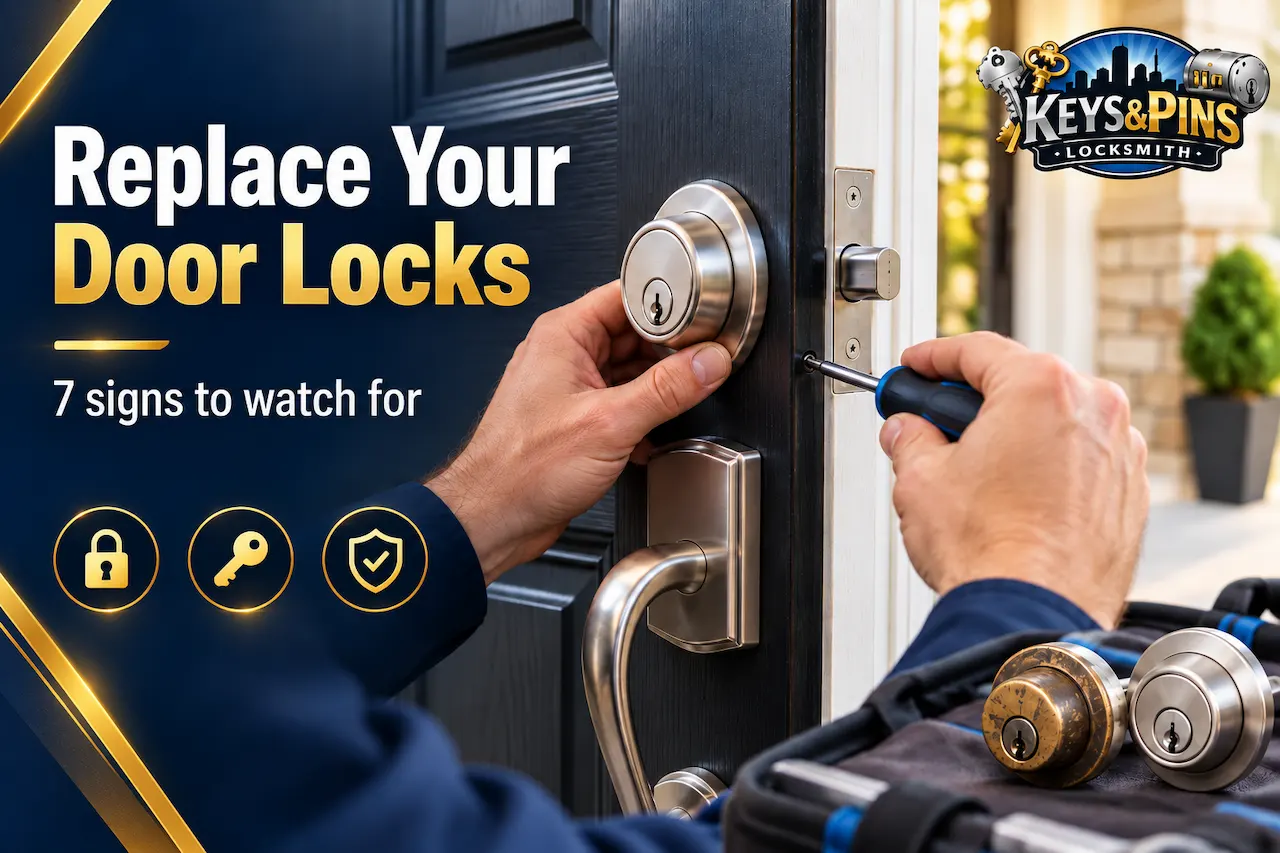
Your door locks aren’t meant to last forever. If you’re fighting with your key every time you come home, or the deadbolt feels loose when you turn it, that’s your lock telling you something. The question isn’t whether something’s wrong it’s whether you need a full replacement or if a simpler fix will do.
Here’s how to tell the difference, and what to do about it.
When to Replace vs. When to Rekey
Before we get into the warning signs, let’s clear this up: rekeying means changing the lock pins so old keys no longer work. Replacement means swapping out the entire lock mechanism. Rekeying costs less and works great if the lock itself is still in good shape you just want different keys to work.
Replace the lock when the hardware is damaged, worn out, outdated, or compromised. Rekey when the lock works fine but you need to control who has access like after a roommate moves out or you buy a house.
Sign 1: The Key Sticks or Won’t Turn Smoothly
If you have to wiggle, jiggle, or force your key to turn, the lock pins inside are worn down. A little graphite spray might help short-term, but if it’s happening every day, the lock is past its useful life. This usually means the internal pins or springs have worn unevenly, and no amount of lubrication will fix it permanently.
Sign 2: The Lock Hardware Is Visibly Loose or Damaged
Grab your deadbolt and wiggle it. If it moves more than a tiny bit, the screws have stripped out or the lock body is cracked. Loose locks are easy to force open even without lockpicking tools.
Check for:
- Screws that won’t tighten no matter how much you crank them
- The lock cylinder spinning freely instead of catching
- Visible cracks in the metal housing
- The bolt not fully extending when you turn the key
Any of these mean replacement, not repair.
Sign 3: Your Keys Are Worn Down or Bent
If your key looks rounded at the edges or has grooves that are barely visible anymore, it’s not gripping the lock pins correctly. But here’s the thing if the key is that worn, the lock pins probably are too. Getting a fresh key cut won’t solve it if the lock itself is equally worn. Both need to go.
Sign 4: The Lock Has Been Tampered With or Damaged in a Break-In
Even if a break-in attempt didn’t succeed, replace the lock. Forced entry bends internal components you can’t see. The lock might still turn, but it’s structurally compromised and easier to pick or force open next time. Insurance companies will often cover this replacement if you file a police report.
Sign 5: The Lock Is Outdated or Low-Grade
If your deadbolt is a builder-grade Kwikset or Schlage from 15+ years ago, it’s not meeting modern security standards. Older locks have fewer pins, weaker strike plates, and are easier to bump or pick.
Upgrading to a high-security deadbolt with at least a Grade 1 or Grade 2 ANSI rating makes a real difference. We see this all the time in older neighborhoods around Edmond and Norman original locks from the ’90s that were fine then but wouldn’t slow anyone down now.
Sign 6: You’ve Had the Same Lock Repaired Multiple Times
If a locksmith has come out twice to fix the same lock, stop throwing money at it. At that point, replacement is cheaper than a third service call and you’ll actually have a lock that works.
Sign 7: You Don’t Know Who Has Keys
This is the one time rekeying might be enough instead of replacement. If you just bought a house, ended a relationship, or had a contractor lose a key, and the lock itself still works fine rekey it. We can do that on the spot from our mobile truck.
But if you’re in this situationand the lock shows any of the other signs on this list, replace it. Don’t rekey a lock that’s already failing.
What We Tell Customers Not to Do
Don’t come to us if your lock just needs lubrication or a simple adjustment you can do yourself. Spray a little graphite powder (not WD-40) into the keyway and work the key in and out a few times. Tighten the screws on the strike plate. If that fixes it, you’re good.
How Much Does Lock Replacement Cost?
Expect to pay between $100 and $250 per lock for a standard residential deadbolt replacement, including the lock and installation. High-security locks run $200-$400. Rekeying costs about $20-$30 per lock if you’re keeping the hardware.
Frequently Asked Questions
How long should a door lock last?
A quality deadbolt should last 7-10 years with normal use. High-traffic doors like front entries wear out faster. Cheap builder-grade locks often start failing around the 5-year mark.
Can I replace a lock myself?
If you’re handy and the door is standard, yes most deadbolts are DIY-friendly. But if the door is metal, the hole is damaged, or you’re upgrading to a smart lock, call a locksmith.
Ready to get started in Oklahoma City?
Keys & Pins Locksmith is here to help with signs you need to replace your door locks in Oklahoma City. Reach out today and we’ll walk you through your options, answer your questions, and book a time that works for you.
Call (405) 400-8183 or visit Keys & Pins Locksmith to schedule your Oklahoma City appointment.